
Showing posts with label ChoiceNovel. Show all posts
Showing posts with label ChoiceNovel. Show all posts
Saturday, May 27, 2017
Year of Wonders Book Trailer
I made a book trailer for Year of Wonders by Geraldine Brooks, the book I've been reading for my Choice Novel unit, for my English final. Here it is!

Tuesday, May 16, 2017
Year of Wonders Reader's Response #15
Finally...the ending you've been waiting for...
Apple-Picking Time & Epilogue: The Waves, Like Ridges of Plow'd Land
Apple-Picking Time & Epilogue: The Waves, Like Ridges of Plow'd Land
The novel picks back up to the beginning of the novel, year 1666. Mr. Mompellion is saddened by the loss of his wife. He doesn't shave, so Anna shaves his face. She is trying to fulfill Elinor's wish of her becoming Mr. Mompellion's friend. After Elizabeth Bradford shows up (this scene is at the beginning of the novel) and Mr. Mompellion proclaims he has no faith in God, Anna leaves to ride on Mr. Mompellion's horse. When she comes back, Mr. Mompellion tries to scold her for leaving so abruptly, but he falls in self-pity and Anna and him kiss. The next day Mr. Mompellion stays over at Anna's house. Anna asks him if he thinks of Elinor when he's with her, and he responds that he never consummated his marriage with his wife as a way to atone for her sins in doing an abortion. Mr. Mompellion tells Anna that although he was tempted, he convinced himself that Elinor was not worthy of him. He takes on a sardonic tone, as he says his efforts in making Elinor suffer for her sins was in vain because he realizes now that "there is no God, and [he] was wrong". He goes on to claim that he was also wrong in "what [he] asked of [himself]. For of course [he] did love her and desired her, no matter how hard [he] turned the press down up [his] own feelings. Wrong in doing that, and wrong, most shockingly wrong, in what [he] asked of this village"...he exclaims, "Who was I to lead them to their doom?" (Brooks, 280).
I was so surprised by the fact that Mr. Mompellion, the only rector in the village who convinced everybody to believe in God's acts, stops believing in God. In my history classes from the past, I've learned that people usually adopt a religion to combat times of crisis. That's how the first religions appeared among the first river valley civilizations, where it flooded a lot. So, in this severe time of crisis, why did Mr. Mompellion give up religion? Back to the plot...
Anna, shocked by Mr. Mompellion's state, leaves immediately and goes to the church, where she finds Elizabeth Bradford who tells her her mother is close to death in childbirth. Despite the Bradford's obvious lack of respect for Anna, she hastily agrees to go help since she has some experience with midwifing. When she arrives at the Bradford's, she finds Mrs. Bradford in labor and on the brink of death. Anna gets to work immediately and delivers the child. She entrusts Elizabeth to take care of the baby while she goes to get medicine for Mrs. Bradford. However, she catches Elizabeth in the act of attempting to drown the baby. She admits that the child is illegitimate, and that her father, Colonel Bradford, wants it dead. So, Anna, thinking on her feet, suggests taking the child and raising it as her own. Elizabeth rejects this -- how can a child grow up knowing that they could have lived in the Bradford mansion? So Anna suggests moving to a different location. At this, Elizabeth accepts and gives Anna money to go away. She goes to her cottage to pack her belongings, and when she's about to leave to runs into Mr. Mompellion who apologizes for what he did, and is in deep shame of himself. He gives Anna his horse so that she can leave the village quicker.
In the epilogue, Anna's narration picks up years later. She and the newly born child traveled across England to get away from Colonel Bradford. They ended up on the North African Coast where the famous medical doctor of the time, Ahmed Bey, takes Anna as one of his wives (only by name) so that she can stay at the harem and study medicine. She establishes herself as a successful midwife there. She describes how different the culture is there: the women now know her as "Umm Jam-ee", of "Mother of Jamie" after her son that died from the plague. She reveals that she named the Bradford's child Aisha, the word meaning "life", which was suggested by Ahmed Bey. She also had a child (belonging to Mr. Mompellion) who she named Elinor.
The ending of this book was not at all what I expected. Anna goes from living in the same small village of Eyam her entire life to living on a different continent with a whole different type of lifestyle. I like it. It's a fresh start. She leaves the past behind, and now focuses on what she's always has a nick at. The two girls she has, I like to think, take on the roles of Jamie and Tom, her two sons that died. Anna was too advanced for the society in which she lived in. Thus, the most scietifically advanced society during the time, that of the Arabs, suits her.
I was so surprised by the fact that Mr. Mompellion, the only rector in the village who convinced everybody to believe in God's acts, stops believing in God. In my history classes from the past, I've learned that people usually adopt a religion to combat times of crisis. That's how the first religions appeared among the first river valley civilizations, where it flooded a lot. So, in this severe time of crisis, why did Mr. Mompellion give up religion? Back to the plot...
Anna, shocked by Mr. Mompellion's state, leaves immediately and goes to the church, where she finds Elizabeth Bradford who tells her her mother is close to death in childbirth. Despite the Bradford's obvious lack of respect for Anna, she hastily agrees to go help since she has some experience with midwifing. When she arrives at the Bradford's, she finds Mrs. Bradford in labor and on the brink of death. Anna gets to work immediately and delivers the child. She entrusts Elizabeth to take care of the baby while she goes to get medicine for Mrs. Bradford. However, she catches Elizabeth in the act of attempting to drown the baby. She admits that the child is illegitimate, and that her father, Colonel Bradford, wants it dead. So, Anna, thinking on her feet, suggests taking the child and raising it as her own. Elizabeth rejects this -- how can a child grow up knowing that they could have lived in the Bradford mansion? So Anna suggests moving to a different location. At this, Elizabeth accepts and gives Anna money to go away. She goes to her cottage to pack her belongings, and when she's about to leave to runs into Mr. Mompellion who apologizes for what he did, and is in deep shame of himself. He gives Anna his horse so that she can leave the village quicker.
In the epilogue, Anna's narration picks up years later. She and the newly born child traveled across England to get away from Colonel Bradford. They ended up on the North African Coast where the famous medical doctor of the time, Ahmed Bey, takes Anna as one of his wives (only by name) so that she can stay at the harem and study medicine. She establishes herself as a successful midwife there. She describes how different the culture is there: the women now know her as "Umm Jam-ee", of "Mother of Jamie" after her son that died from the plague. She reveals that she named the Bradford's child Aisha, the word meaning "life", which was suggested by Ahmed Bey. She also had a child (belonging to Mr. Mompellion) who she named Elinor.
The ending of this book was not at all what I expected. Anna goes from living in the same small village of Eyam her entire life to living on a different continent with a whole different type of lifestyle. I like it. It's a fresh start. She leaves the past behind, and now focuses on what she's always has a nick at. The two girls she has, I like to think, take on the roles of Jamie and Tom, her two sons that died. Anna was too advanced for the society in which she lived in. Thus, the most scietifically advanced society during the time, that of the Arabs, suits her.
Monday, May 8, 2017
Year of Wonders Reader's Response #13
A Great Burning & Deliverance
Elinor begins coughing and comes down with a fever. Mr. Mompellion and Anna immediately become concerned because they all, including Elinor, think that Elinor is going to die from the plague. She tells Anna, "I hope you will find it in your heart to be a friend to Mr. Mompellion, Anna..." (Brooks, 235). However, it turns out to be just a regular fever and Elinor recovers quickly.
Mr. Mompellion has a revelation from God to get rid of the plague. On Sunday, he tells the villagers, "'To save our lives, my friends, I believe we must undertake here a great burning'" (Brooks, 238). He convinces the villagers to burn all of their belongings, which was extremely hard when they have all lost so much. At the bonfire, Brand Rigney and the Merills' neighbor, Robert Snee, drag in Aphra, who is in a black cloth and veil. She is the "ghost" of Anys that has been demanding money from people for her "spells" to cure the plague! Mr. Mompellion decides not to make a big deal of it right then and there and tells Brand and Robert to keep her in captivity for the night. However, Brand and Robert put her in Robert's pig pen where Aphra suffers. When she gets out, so many people pity her that the punishment for her bad deeds that Mr. Mompellion just tells her to repay the money she took. Aphra goes crazy. She doesn't accept anybody's help, not even Anna. One day, Anna passes by her house and sees that Aphra is dancing wildly with a snake in front of a fire. Anna barges in and finds that Aphra has hanged the plague-stricken corpse of her only child left, Faith, on the ceiling.
Two weeks after the Great Burning, Anna and Elinor notice that there hasn't been a new case of the plague, and less people had died. Elinor tells Mr. Mompellion that they should hold a Thanksgiving celebration for the ending of the plague. At the celebration, Aphra appears with a knife in one hand (the one she took from Josiah's death site) and the corpse of Faith in another. Mr. Mompellion tries to stop her, and then Elinor goes toward the two. The head of Faith falls off and rolls on the ground. This makes Aphra lunge at Elinor and slice her throat before stabbing herself.
This section of the book is very controversial. The plague ends, yet the death of a most dear friend to Elinor dies. It is foreshadowed by the author of Elinor's death with the introduction to the book (set in 1666 after Elinor died) and how Elinor appears as a bridal presence in a formal white gown and garland of flowers to symbolize her chastity.
Elinor begins coughing and comes down with a fever. Mr. Mompellion and Anna immediately become concerned because they all, including Elinor, think that Elinor is going to die from the plague. She tells Anna, "I hope you will find it in your heart to be a friend to Mr. Mompellion, Anna..." (Brooks, 235). However, it turns out to be just a regular fever and Elinor recovers quickly.
Mr. Mompellion has a revelation from God to get rid of the plague. On Sunday, he tells the villagers, "'To save our lives, my friends, I believe we must undertake here a great burning'" (Brooks, 238). He convinces the villagers to burn all of their belongings, which was extremely hard when they have all lost so much. At the bonfire, Brand Rigney and the Merills' neighbor, Robert Snee, drag in Aphra, who is in a black cloth and veil. She is the "ghost" of Anys that has been demanding money from people for her "spells" to cure the plague! Mr. Mompellion decides not to make a big deal of it right then and there and tells Brand and Robert to keep her in captivity for the night. However, Brand and Robert put her in Robert's pig pen where Aphra suffers. When she gets out, so many people pity her that the punishment for her bad deeds that Mr. Mompellion just tells her to repay the money she took. Aphra goes crazy. She doesn't accept anybody's help, not even Anna. One day, Anna passes by her house and sees that Aphra is dancing wildly with a snake in front of a fire. Anna barges in and finds that Aphra has hanged the plague-stricken corpse of her only child left, Faith, on the ceiling.
Two weeks after the Great Burning, Anna and Elinor notice that there hasn't been a new case of the plague, and less people had died. Elinor tells Mr. Mompellion that they should hold a Thanksgiving celebration for the ending of the plague. At the celebration, Aphra appears with a knife in one hand (the one she took from Josiah's death site) and the corpse of Faith in another. Mr. Mompellion tries to stop her, and then Elinor goes toward the two. The head of Faith falls off and rolls on the ground. This makes Aphra lunge at Elinor and slice her throat before stabbing herself.
This section of the book is very controversial. The plague ends, yet the death of a most dear friend to Elinor dies. It is foreshadowed by the author of Elinor's death with the introduction to the book (set in 1666 after Elinor died) and how Elinor appears as a bridal presence in a formal white gown and garland of flowers to symbolize her chastity.
Sunday, May 7, 2017
Year of Wonders Reader's Response #12
The Press of Their Ghosts
Anna trips on a rock. She trips on a rock, and that is all it takes for her to think of revolutionary ideas that were way beyond her time. She begins to ponder the work of nature compared to what the people thought was God. She believes that the rock that caused her to trip was not placed there by God, but rather by nature. This causes her to think, "Perhaps the Plague was neither of God nor the Devil, but simply a thing in Nature, as the stone on which we stub a toe" (Brooks, 215). Anna follows the path of the Enlightenment (starting in France in the 18th century), which involved the application of human reason to improve society following the newly attributed data from the Scientific Revolution. Some Enlightenment thinkers followed a scientific philosophy called Dewism, which held that there was a god who created the earth, then left it to operate by natural law. Maybe the most prominent reason why I bring up the Enlightenment era is because I just went over it in my World History AP review book (I have my big exam this week ahhh!!), but I wanted to make the connection that illustrates Anna as a woman that bypasses the level of intelligence present in her community. I mean, she understands that the Plague is contagious and is not a work of God to punish them for their sins. She suggests that if people spend more time to learn "how the Plague spread and poisoned our blood" than "contemplating God, and why He afflicted [them]", then the villagers of Eyam would have a greater chance of surviving. And it wasn't until the 1880's that Louis Pasteur discovered the germ theory of disease.
In this chapter, fear is seen affecting people in different ways. Anna finds John Gordon (the man who beat his wife, Urith, at the killing site of the Gowdies) practicing flagellation. John obtained the idea from a historical book in London. Immediately informing Mr. Mompellion, he sets out to stop it because he knows that this self-inflicted pain is a type of zealousness that will spread if not stopped.
 |
| The Flagellants were religious zealots of the Middle Ages in Europe who showed their religious fervor and looked for atonement for their sins by vigorously whipping themselves in public displays of penance. Flagellantism was most popular in times of crisis. Prolonged plague, hunger, drought and other natural maladies would motivate thousands to resort to this extreme method of gaining relief. Despite condemnation of the Catholic Church, the movement gained strength and the highest popularity during the Black Death. |
Anna is jealous of Mr. Mompellion and Elinor because the plague hadn't taken them away from each other, while Anna was left without love from a man and no man to give love to.
Saturday, May 6, 2017
Year of Wonders Reader's Response #11
The Body of the Mine
Josiah Bont becomes greedy as a gravedigger, demanding a large pay and even digging graves before the dead are dead. After hearing that Josiah was digging up a grave on Christopher Unwin's property, Anna and Mr. Mompellion set off to stop him. Christopher Unwin is the last surviving son of his large family that had all been killed by the plague. Christopher himself had fallen ill, but he was seeming to recover from the plague, something that was extremely rare in the village. While Anna tended to Christopher, Mr. Mompellion argues and then physically fights Josiah.
The next day, Christopher appears covered in mud and blood in front of the villagers. Josiah had tried to bury him alive. The whole town enraged, Josiah is forced to go to the Miner's Tavern (the village's only court system) to have a trial. When asked if anybody has a defense for him, Anna says nothing. He is taken to the Unwin mine and stabbed. The tradition is that the guilty is to be saved by their kin or otherwise left to die. Nobody saves Josiah Bont. Not even Aphra, although she has a good escuse. That night, the plague had taken all of her children but one. Aphra shows up to Anna's door three days later (for there was a storm) distraught. The two of them go to the Unwin mine where they find Josiah's corpse. Anna notes that Aphra does not make a cross for his grave, but instead a manikin. When Anna says "Amen" after she prayed over her father's grave, Aphra made a sign at the end of it that did not resemble to sign of the cross.
Josiah Bont becomes greedy as a gravedigger, demanding a large pay and even digging graves before the dead are dead. After hearing that Josiah was digging up a grave on Christopher Unwin's property, Anna and Mr. Mompellion set off to stop him. Christopher Unwin is the last surviving son of his large family that had all been killed by the plague. Christopher himself had fallen ill, but he was seeming to recover from the plague, something that was extremely rare in the village. While Anna tended to Christopher, Mr. Mompellion argues and then physically fights Josiah.
The next day, Christopher appears covered in mud and blood in front of the villagers. Josiah had tried to bury him alive. The whole town enraged, Josiah is forced to go to the Miner's Tavern (the village's only court system) to have a trial. When asked if anybody has a defense for him, Anna says nothing. He is taken to the Unwin mine and stabbed. The tradition is that the guilty is to be saved by their kin or otherwise left to die. Nobody saves Josiah Bont. Not even Aphra, although she has a good escuse. That night, the plague had taken all of her children but one. Aphra shows up to Anna's door three days later (for there was a storm) distraught. The two of them go to the Unwin mine where they find Josiah's corpse. Anna notes that Aphra does not make a cross for his grave, but instead a manikin. When Anna says "Amen" after she prayed over her father's grave, Aphra made a sign at the end of it that did not resemble to sign of the cross.
Year of Wonders Reader's Response #10
Among Those That Go Down to the Pit
Mr. Mompellion is so physically exhausted from digging up graves and going to people's deathbeds to give them their last prayer that one day he faints at church. Right before he had fainted he had announced to the villagers that the church was going to be closed to prevent the spread of the contagion. Instead, he says, they will meet on Sundays at Cucklett Delf. He also says that the cemeteries are overcrowded and for that reason people will have to bury the dead on their own property. Many people seem to be against this last statement.
Because Anna is so worried about Mr. Mompellion's physical weakness, she calls upon her father, Josiah Bont, to become the new sexton, or gravedigger. She does this with good intentions: she hopes that it can be a relief to Mr. Mompellion's hard work and at the same time it can help sustain her younger half siblings who are described by Anna as looking "thin and ill fed" because her father and stepmother, Aphra, "both liked better the act that led to the begetting of children than they did the providing for them" (Brooks, 162-163). Ouch. It seems like Anna will never run out of things to call her stepmother and father out on. In a similar manner, this reminds me of Jane Austen's Pride and Prejudice (yes, I know, I keep on using this literary connection. But there are so many parallels that can be drawn with this book...). Like Elizabeth Bennett who rises above the social standings for women during her time period and outsmarts even her own family, Anna rises above the uneducated ignorant people that make up her family.
Meanwhile, there's this orphan -- nine-year-old Merry Wickford -- from a Quaker family that all died from the plague. Her father had discovered the Burning Drake, a mine filled with ore which he claimed. Due to the mining laws of the village, a mine is required to provide a dish of ore every few weeks in order for the owner to keep it. Because Merry was the only one left in her family, the whole town saw that she was going to lose heir to the mine. How could a nine-year-old girl possibly mine a dish of ore? Greedy people, such as David Burton, started to think that the mine belonged to him already. This is when Anna steps up and proposes the insane idea to Elinor that they go mine the ore themselves so that Merry can have her mine saved. Effectively, they go, and Anna, knowing a little bit of the mining technique from her late miner husband Sam, suggests that they use a makeshift explosive to loosen the ore after a failed first attempt to hammer out the ore flakes. Anna proves her bravery once again when she volunteers to go underground in the mine and detonate the blast, knowing that that same technique was what had killed her husband. Elinor's reasoning is that it didn't matter if they were to die that day because of a mining incident because if it wasn't that death, it would be the plague. What can I say? Elinor isn't wrong.
So, Anna detonates the explosive. The ore loosens, and so does the rock surrounding it. Anna is crushed by the rock. She thought that she was going to die: she has a hallucination of her boys. She would have certainly died if Merry and Elinor hadn't gone down and rescued her.
Immediately, the three girls go to the Barmester (the official of the Barmote Court, a court held in the lead mining districts of Derbyshire, England, for the purpose of determining the customs peculiar to the industry). With more than enough ore to save her mine for a long time, the Barmester determines that Merry gets to keep her mine. Even though Anna is bruised all over and experiences great pain from the accident at the mine, that night she still sleeps better "than [she] had since the nights of the poppy dreams" and feels as for the first time during that tough seasons, she had "the satisfaction of having done a thing that had come out right" (Brooks, 187).
Thursday, May 4, 2017
Year of Wonders Reader's Response #9
The Poppies of Lethe
This chapter, aptly named for what the Greek called poppy after the Greeks' river of forgetfulness, Lethe, contains, as you may have guessed, the use of opium to, well, forget things. More specifically, to forget the dreadfulness that is occurring in the town and in Anna's life.
In Wide Green Prison, Anna stole a phial of poppy from Mrs. Mompellion when they had just delivered Mary Daniel's baby. One night, Anna makes a mixture of the poppy resin. She mixes it with honey and eats it to have one night of happiness. That night, she has wonderful dreams with her children and beautiful scenery. She wakes up refreshed, only to face the harsh reality of the village again. More deaths pile up, and one of them happens to be Lib Hancock, Anna's childhood best friend. This makes Anna even more sad than before, and when she realizes she has used up all of the poppy, she has the idea to look for poppy at the Gowdies' house. On her way, she stops by the Talbots' house, where she catches Kate Talbot use a spell on her sickened and dying husband, Richard Talbot. When Anna asks where Kate found such a non-Christian object, she claims that the ghost of Anys Gowdie gave it to her for the price of one shilling. Anna immediately rebukes this fact, stating that Anys Gowdie's cures consisted of herbal medicines, not worthless charms. Anna enters the Gowdies' cottage to find Mrs. Mompellion already there. Wanting to open up to her and become friends, Mrs. Mompellion urges Anna to call her by her first name, Elinor. Anna confesses to Elinor that she did not go to the Gowdies' to find herbs to help others, but rather to find poppy to suit her personal needs. Elinor says that she knows, and reveals to Anna that she has used it before. Elinor cogently opens up to Anna, there is no doubt. Anna learns that Elinor was the only daughter of a wealthy gentleman. She was spoiled, and enjoyed many privileges including education and pleasure for anything she desired. She was fourteen when a young man and the heir to a dukedom began to pursuit her. When Elinor's father found out, he told Elinor to stop immediately. She obeyed her father at first, but when he was off on a business trip, Elinor's pursuer came back and convinced her to elope with him. The man abandoned her at an inn and London, and Elinor had no other choice but to return to her father and brother who had been desperately looking for her. They tried to cover the whole thing up, but there had been a problem: Elinor was pregnant. Full with shame, Elinor had an abortion by using a hot poker. Elinor was saved, but suffered the consequences of being infertile for the rest of her life. She experienced great physical pain, which is when she was introduced to poppy. Michael Mompellion, who was Elinor's father's ward at the time, offered Elinor his friendship and eventually his hand in marriage. Michael was the one that influenced Elinor to be happy again: he "showed [her] sorrows far worse than [hers] and pain far less deserved" and how Elinor could achieve forgiveness for her sins (Brooks, 152). For the outsiders, the marriage between Elinor and Michael made it seem that she had "stooped to marry him" since she was from a wealthy family and Michael was a boy without anything acquired to his name (Brooks, 152). However, what the rest of the world didn't see was how Michael was the one who sacrificed a future with children to marry her. After hearing the story, Anna and Elinor agree to work together to search for herbs that will help the village combat the plague. Anna throws the poppy into the fire.
From Elinor's story, Anna learns "how little we know of the people we live amongst", and she is so right (Brooks, 152). My seventh grade science teacher, Ms. Garcia, once said something that I will always remember: she told our class one day, "Don't judge someone for what you see of them. You don't know what it's like for them when enter their house". Both Anna and Ms. Garcia have true statements. Although you think you may know a person and thus are entitled to judge them, you really can't know what their personal life is like. Even though Elinor seemed like an innocent, lucky, spoiled young girl to the outside world, people didn't see how much she suffered on the inside.
On that note, Elinor's elopement with the heir to the dukedom reminds me of the similar plot in Jane Austen's Pride and Prejudice, where the young and naive Lydia Bennett has an elopement with a soldier. Lydia and her family's reputation is only saved by a wealthy gentleman, Mr. Darcy, who pays the soldier to marry her. Unlike with Lydia's situation, Elinor had nobody who knew about her elopement to save her of humiliation in time. While Lydia gets away with her marriage to her darling Wickham, Elinor suffers the consequences of never being able to bear a child again and the loss of her old life of luxury.
This chapter, aptly named for what the Greek called poppy after the Greeks' river of forgetfulness, Lethe, contains, as you may have guessed, the use of opium to, well, forget things. More specifically, to forget the dreadfulness that is occurring in the town and in Anna's life.
In Wide Green Prison, Anna stole a phial of poppy from Mrs. Mompellion when they had just delivered Mary Daniel's baby. One night, Anna makes a mixture of the poppy resin. She mixes it with honey and eats it to have one night of happiness. That night, she has wonderful dreams with her children and beautiful scenery. She wakes up refreshed, only to face the harsh reality of the village again. More deaths pile up, and one of them happens to be Lib Hancock, Anna's childhood best friend. This makes Anna even more sad than before, and when she realizes she has used up all of the poppy, she has the idea to look for poppy at the Gowdies' house. On her way, she stops by the Talbots' house, where she catches Kate Talbot use a spell on her sickened and dying husband, Richard Talbot. When Anna asks where Kate found such a non-Christian object, she claims that the ghost of Anys Gowdie gave it to her for the price of one shilling. Anna immediately rebukes this fact, stating that Anys Gowdie's cures consisted of herbal medicines, not worthless charms. Anna enters the Gowdies' cottage to find Mrs. Mompellion already there. Wanting to open up to her and become friends, Mrs. Mompellion urges Anna to call her by her first name, Elinor. Anna confesses to Elinor that she did not go to the Gowdies' to find herbs to help others, but rather to find poppy to suit her personal needs. Elinor says that she knows, and reveals to Anna that she has used it before. Elinor cogently opens up to Anna, there is no doubt. Anna learns that Elinor was the only daughter of a wealthy gentleman. She was spoiled, and enjoyed many privileges including education and pleasure for anything she desired. She was fourteen when a young man and the heir to a dukedom began to pursuit her. When Elinor's father found out, he told Elinor to stop immediately. She obeyed her father at first, but when he was off on a business trip, Elinor's pursuer came back and convinced her to elope with him. The man abandoned her at an inn and London, and Elinor had no other choice but to return to her father and brother who had been desperately looking for her. They tried to cover the whole thing up, but there had been a problem: Elinor was pregnant. Full with shame, Elinor had an abortion by using a hot poker. Elinor was saved, but suffered the consequences of being infertile for the rest of her life. She experienced great physical pain, which is when she was introduced to poppy. Michael Mompellion, who was Elinor's father's ward at the time, offered Elinor his friendship and eventually his hand in marriage. Michael was the one that influenced Elinor to be happy again: he "showed [her] sorrows far worse than [hers] and pain far less deserved" and how Elinor could achieve forgiveness for her sins (Brooks, 152). For the outsiders, the marriage between Elinor and Michael made it seem that she had "stooped to marry him" since she was from a wealthy family and Michael was a boy without anything acquired to his name (Brooks, 152). However, what the rest of the world didn't see was how Michael was the one who sacrificed a future with children to marry her. After hearing the story, Anna and Elinor agree to work together to search for herbs that will help the village combat the plague. Anna throws the poppy into the fire.
From Elinor's story, Anna learns "how little we know of the people we live amongst", and she is so right (Brooks, 152). My seventh grade science teacher, Ms. Garcia, once said something that I will always remember: she told our class one day, "Don't judge someone for what you see of them. You don't know what it's like for them when enter their house". Both Anna and Ms. Garcia have true statements. Although you think you may know a person and thus are entitled to judge them, you really can't know what their personal life is like. Even though Elinor seemed like an innocent, lucky, spoiled young girl to the outside world, people didn't see how much she suffered on the inside.
On that note, Elinor's elopement with the heir to the dukedom reminds me of the similar plot in Jane Austen's Pride and Prejudice, where the young and naive Lydia Bennett has an elopement with a soldier. Lydia and her family's reputation is only saved by a wealthy gentleman, Mr. Darcy, who pays the soldier to marry her. Unlike with Lydia's situation, Elinor had nobody who knew about her elopement to save her of humiliation in time. While Lydia gets away with her marriage to her darling Wickham, Elinor suffers the consequences of never being able to bear a child again and the loss of her old life of luxury.
Wednesday, May 3, 2017
Year of Wonders Reader's Response #8
So Soon to Be Dust
Brand Rigney, who used to be the pantry boy for the Bradfords, returns to the village (him and Maggie had set off the Bakewell after the Bradfords had fired them because that is where they were originally from) pulling a near-to-death Maggie in a cart. He explains the story behind their situation: they had a decent uneventful journey to the other town until they reached the larger center of Bakewell. Someone had recognized Maggie and began to exclaim, "A woman from the Plague village! Beware! Beware!" (Brooks, 126), and they began throwing stones at her. Brand stole a cart and hauled Maggie back to the village. Like I stated in my last post, the importance of social class during this time period is nonsensical. So, the Bradfords get an extravagant salute on their way out of the village yet Maggie gets stones thrown at her? This extreme contrast reflects the role and how much people's lives depended on their social standing.
Anna encounters her drunkard father, Josiah Bont, and humiliates him by quoting "'Let no corrupt communication proceed out of your mouth, but that which is good to the use of edifying'" when he mocks her spending time with the educated Mompellions (Brooks, 130). Angered, her father abuses her as he had done in the past and it is revealed that he used to abuse Anna's mother as well. When her mother had cursed him in public for his constant drunkenness, Josiah framed her face "in the iron bars" and Anna remembers her mother's "desperate look in her wild eyes, the inhumane sounds that came from her throat as the iron bit pressed hard against her tongue" (Brooks, 130). The device Josiah Bont used on his wife is described in the book as "branks", so I looked it up. According to Oxford Dictionaries, the word is defined as "an instrument of punishment for a scolding woman, consisting of an iron framework for the head and a sharp metal gag for restraining the tongue".


Brand Rigney, who used to be the pantry boy for the Bradfords, returns to the village (him and Maggie had set off the Bakewell after the Bradfords had fired them because that is where they were originally from) pulling a near-to-death Maggie in a cart. He explains the story behind their situation: they had a decent uneventful journey to the other town until they reached the larger center of Bakewell. Someone had recognized Maggie and began to exclaim, "A woman from the Plague village! Beware! Beware!" (Brooks, 126), and they began throwing stones at her. Brand stole a cart and hauled Maggie back to the village. Like I stated in my last post, the importance of social class during this time period is nonsensical. So, the Bradfords get an extravagant salute on their way out of the village yet Maggie gets stones thrown at her? This extreme contrast reflects the role and how much people's lives depended on their social standing.
Anna encounters her drunkard father, Josiah Bont, and humiliates him by quoting "'Let no corrupt communication proceed out of your mouth, but that which is good to the use of edifying'" when he mocks her spending time with the educated Mompellions (Brooks, 130). Angered, her father abuses her as he had done in the past and it is revealed that he used to abuse Anna's mother as well. When her mother had cursed him in public for his constant drunkenness, Josiah framed her face "in the iron bars" and Anna remembers her mother's "desperate look in her wild eyes, the inhumane sounds that came from her throat as the iron bit pressed hard against her tongue" (Brooks, 130). The device Josiah Bont used on his wife is described in the book as "branks", so I looked it up. According to Oxford Dictionaries, the word is defined as "an instrument of punishment for a scolding woman, consisting of an iron framework for the head and a sharp metal gag for restraining the tongue".

Year of Wonders Reader's Response #7
Wide Green Prison
In this chapter, Anna describes the fleeing of the Bradford's entire staff, which they fired without any notice. Maggie Cantwell, the Bradford's cook, showed up to Anna's door not for shelter because her house was known as one of the Plague cottages, but instead for help in moving all of her possessions from the Bradford Hall. It really disgusts me that the Colonel not only is putting the life of other people outside the village at risk, but that he is also leaving many people unemployed and without a roof over their head in the village that he leaves behind. When Mr. Mompellion arrives in the middle of the frenzied moving scene, he attempts one more time to get the Bradfords to stay behind, claiming that a real man would stay behind for the benefit of everyone. Colonel Bradford only replies, "...if I desired to succor the afflicted I would have joined you in Holy Orders" (Brooks, 111). Man, this guy really is the Regina George of the 17th century. The ultimate wealthy, rude, and selfish mean girl of the town. What surprised me most was how the villagers reacted when the Bradfords left. Instead of shaming them for leaving during this time of peril, men "doffed their caps" and women "curtsied" (Brooks, 114). Why are the Bradfords viewed differently because they happen to have more money? They can just as easily carry the "seeds" of the plague as anybody else. This kind of reminds me of that scene in Titanic when the upper-class are allowed to get onto the lifeboats first and did not fill up the maximum capacity of the boat to be more comfortable. Why should the wealthy obtain special privileges at the expense of the lives of others?
Later that day, Elinor Mompellion and Anna help Mary Daniel give birth, since the two midwives of the village, Mem and Anys Gowdie, were dead. Anna is extremely scared because she witnessed her own mother die while giving birth when she was young, and although she helps sheep in labor, she does not feel she is capable of being a midwife to a woman. Despite her worries, Anna delivers the baby and all goes well. The people there were all joyful and "celebrated a life" during that "season of death" (Brooks, 123). However, Anna feels depressed because while Mary had her newborn son, she doesn't have her own sons to go home to anymore. Because of this, she takes the phial of poppy that Mrs. Mompellion had.
I understand Anna's emotions, it must be so difficult to see someone so happy when you've lost so much.
In this chapter, Anna describes the fleeing of the Bradford's entire staff, which they fired without any notice. Maggie Cantwell, the Bradford's cook, showed up to Anna's door not for shelter because her house was known as one of the Plague cottages, but instead for help in moving all of her possessions from the Bradford Hall. It really disgusts me that the Colonel not only is putting the life of other people outside the village at risk, but that he is also leaving many people unemployed and without a roof over their head in the village that he leaves behind. When Mr. Mompellion arrives in the middle of the frenzied moving scene, he attempts one more time to get the Bradfords to stay behind, claiming that a real man would stay behind for the benefit of everyone. Colonel Bradford only replies, "...if I desired to succor the afflicted I would have joined you in Holy Orders" (Brooks, 111). Man, this guy really is the Regina George of the 17th century. The ultimate wealthy, rude, and selfish mean girl of the town. What surprised me most was how the villagers reacted when the Bradfords left. Instead of shaming them for leaving during this time of peril, men "doffed their caps" and women "curtsied" (Brooks, 114). Why are the Bradfords viewed differently because they happen to have more money? They can just as easily carry the "seeds" of the plague as anybody else. This kind of reminds me of that scene in Titanic when the upper-class are allowed to get onto the lifeboats first and did not fill up the maximum capacity of the boat to be more comfortable. Why should the wealthy obtain special privileges at the expense of the lives of others?
Later that day, Elinor Mompellion and Anna help Mary Daniel give birth, since the two midwives of the village, Mem and Anys Gowdie, were dead. Anna is extremely scared because she witnessed her own mother die while giving birth when she was young, and although she helps sheep in labor, she does not feel she is capable of being a midwife to a woman. Despite her worries, Anna delivers the baby and all goes well. The people there were all joyful and "celebrated a life" during that "season of death" (Brooks, 123). However, Anna feels depressed because while Mary had her newborn son, she doesn't have her own sons to go home to anymore. Because of this, she takes the phial of poppy that Mrs. Mompellion had.
I understand Anna's emotions, it must be so difficult to see someone so happy when you've lost so much.
Tuesday, May 2, 2017
Year of Wonders Reader's Response #6
Venom in the Blood
Mem Gowdie dies five days after her niece, Anys, from the wounds she suffered when she nearly drowned and was beaten by the mob. Sucks for the village. They lost their only two midwives/healers, and it's purely their fault.
On Sunday, Mr. Mompellion gives a sermon in which he urges the village to quarantine itself, because if they otherwise leave, they would carry "the seeds of the Plague" to anybody who receives them (Brooks, 102). The Bradfords, at the mention of this, are the focus of Anna's concentration. Remember back a few months ago when Colonel Bradford said he'd leave the village with his family if the plague ever struck? Ya, well it's no surprise when they are the only ones that leave church to go pack for their journey to Oxfordshire.
Mem Gowdie dies five days after her niece, Anys, from the wounds she suffered when she nearly drowned and was beaten by the mob. Sucks for the village. They lost their only two midwives/healers, and it's purely their fault.
On Sunday, Mr. Mompellion gives a sermon in which he urges the village to quarantine itself, because if they otherwise leave, they would carry "the seeds of the Plague" to anybody who receives them (Brooks, 102). The Bradfords, at the mention of this, are the focus of Anna's concentration. Remember back a few months ago when Colonel Bradford said he'd leave the village with his family if the plague ever struck? Ya, well it's no surprise when they are the only ones that leave church to go pack for their journey to Oxfordshire.
"Friends," he said at last, "some of us have the means to flee. Some of us have relatives nearby who would gladly shelter us. Others have connections upon whom we could prevail. Some few of us have means to go far from here -- anywhere we choose"..."But how would we repay the kindness of those who received us, if we carried the seeds of the Plague to them? What burden would we bear if, because of us, hundreds die who might have lived? No! Let us accept this Cross. Let us carry it in God's Holy Name!"..."...here we are, and here we must stay. Let the boundaries of this village become our whole world. Let none enter and none leave while this Plague lasts." (Brooks, 102)My thoughts on this: Does a higher social standing such as the one that the Bradfords hold justify their leave from the village? The plague does not only affect the poor. The fact that the health of others does not cross Colonel Bradford's mind angers me. Now what I'm wondering is what caused the Bradfords to return to the village as portrayed at the beginning of the book which is chronologically placed a year later in 1666.
Year of Wonders Reader's Response #5
Sign of a Witch
Anna's son, Jamie, dies after suffering nasty symptoms of the plague for five days. I can't even imagine what Anna feels. Just in the last chapter, when Jamie threw rose petals into the air and the two boys were being joyful, she claimed that was her miracle moment. A few days later, both of her sons are dead. I can tell that Anna begins to loose her faith in God. First mentioned earlier in the book, the author repeatedly places the phrase "Behold the Handmaid of the Lord. Let it be done unto me according to Thy Word" but this time in segments rather than the complete phrase. Anna recalls the "According to Thy Word" and thinks, "Why were God's words always so harsh?" (Brooks, 87). In the Christian bible, this verse is referring to when Gabriel foretells Jesus' birth and tells Mary. In the novel, by contrast, Anna changes the meaning to one that is more pessimistic and almost scornful to God, as in "God beset the plague that took away my family and friends on purpose" through the repetition of the line segment. Additionally, Anna is curious to know whether the artist of a big cross in an old grave had carved the cross to reflect his own faith or to seek an appeasement of a God "who seemed to want not the love and awe that the Scriptures asked of us, but an endless surfeit of our suffering" (Brooks, 87). To Anna, God may be like the angered vengeful pagan gods that required sacrifices.
Anna is not the only one that starts to lose faith in the goodness of God. Rather than waiting for God, the villagers' fear gets the best of them and they begin to blame their pain to people by accusing them of witchcraft. The first is Mem Gowdie. The enraged villagers tried to kill Mem by throwing her in a flooded mine. Anna sees this and tries desperately to stop her fellow villagers from killing Mem, but she is ineffective. Luckily, Anys shows up and saves her. Then the villagers start to claim that Anys is a witch. Anys, being the wild soul that she is, "confesses" in being a witch and tells the villagers that all the women in the village would prefer Satan over their husbands as a lover. This causes a reaction in the crowd, specifically John Gordon, who begins beating his wife. Anys gets hanged. There's a whole big ruckus which isn't calmed down until Mr. Mompellion shows up and tells the villagers that they should be ashamed in themselves (Brooks, 94).
*Historical connection: Historically, women were accused of being witches for many reasons, such as having beauty, gaining attention from married men, and being natural healers, using different healing methods. Basically, if you were a woman that did not show proper societal restraint, you had an increased chance of being accused of being a witch.The most familiar case in which this corrupt belief was practiced is most likely the infamous Witch Trials that took place in Salem, Massachusetts, where fourteen women and five men were led to their deaths at Gallows Hill.*
My thoughts on this: Much like how the boys in Lord of the Flies by William Golding let their fear consume them and kill the innocent Simon, we see fear take on a similar role in Year of Wonders. The villagers, so petrified from the deadly consequences of the plague, have taken out their fear on innocent women. I am so sad to see Anys die because she was the one voice that stood up for herself and for reason.
Anna's son, Jamie, dies after suffering nasty symptoms of the plague for five days. I can't even imagine what Anna feels. Just in the last chapter, when Jamie threw rose petals into the air and the two boys were being joyful, she claimed that was her miracle moment. A few days later, both of her sons are dead. I can tell that Anna begins to loose her faith in God. First mentioned earlier in the book, the author repeatedly places the phrase "Behold the Handmaid of the Lord. Let it be done unto me according to Thy Word" but this time in segments rather than the complete phrase. Anna recalls the "According to Thy Word" and thinks, "Why were God's words always so harsh?" (Brooks, 87). In the Christian bible, this verse is referring to when Gabriel foretells Jesus' birth and tells Mary. In the novel, by contrast, Anna changes the meaning to one that is more pessimistic and almost scornful to God, as in "God beset the plague that took away my family and friends on purpose" through the repetition of the line segment. Additionally, Anna is curious to know whether the artist of a big cross in an old grave had carved the cross to reflect his own faith or to seek an appeasement of a God "who seemed to want not the love and awe that the Scriptures asked of us, but an endless surfeit of our suffering" (Brooks, 87). To Anna, God may be like the angered vengeful pagan gods that required sacrifices.
Anna is not the only one that starts to lose faith in the goodness of God. Rather than waiting for God, the villagers' fear gets the best of them and they begin to blame their pain to people by accusing them of witchcraft. The first is Mem Gowdie. The enraged villagers tried to kill Mem by throwing her in a flooded mine. Anna sees this and tries desperately to stop her fellow villagers from killing Mem, but she is ineffective. Luckily, Anys shows up and saves her. Then the villagers start to claim that Anys is a witch. Anys, being the wild soul that she is, "confesses" in being a witch and tells the villagers that all the women in the village would prefer Satan over their husbands as a lover. This causes a reaction in the crowd, specifically John Gordon, who begins beating his wife. Anys gets hanged. There's a whole big ruckus which isn't calmed down until Mr. Mompellion shows up and tells the villagers that they should be ashamed in themselves (Brooks, 94).
*Historical connection: Historically, women were accused of being witches for many reasons, such as having beauty, gaining attention from married men, and being natural healers, using different healing methods. Basically, if you were a woman that did not show proper societal restraint, you had an increased chance of being accused of being a witch.The most familiar case in which this corrupt belief was practiced is most likely the infamous Witch Trials that took place in Salem, Massachusetts, where fourteen women and five men were led to their deaths at Gallows Hill.*
My thoughts on this: Much like how the boys in Lord of the Flies by William Golding let their fear consume them and kill the innocent Simon, we see fear take on a similar role in Year of Wonders. The villagers, so petrified from the deadly consequences of the plague, have taken out their fear on innocent women. I am so sad to see Anys die because she was the one voice that stood up for herself and for reason.
Monday, May 1, 2017
Year of Wonders Reader's Response #4
Rat-fall
In this chapter, both good and tragic things happen. On the positive end of the spectrum, Anna learns that Mr. Mompellion takes pleasure in the most natural things such as the beauty in that day of September and is playful with her children. This surprises her because the rector was known to not make conversations with her nor talk about anything other than "lofty words spoken from high pulpits" (Brooks, 69). He is kind and good to Anna in ways she never imagined. Anna observes that it is a great thing that such a "lofty thinker" could have "so close a communion with the ordinary things of the soil and of the seasons" (Brooks, 70).
The mood of this passage takes a toll for devastation when Anna's neighbor Mary Hadfield loses her husband and her two sons (one of which was Jamie's age) during a flea infestation. Edward, the young son, and Jamie, Anna's three-year-old, had been found playing with dead rats (ew!) earlier. The Hadfield family call in a barber-surgeon (to Mem Gowdie's disappointment) who places leeches on Edward to cure him. He, of course, dies later in the night. As the surgeon was leaving, Anna approaches him and asks him if Edward's illness could be the plague. He is angered that a woman would try to undermine his diagnosis. Anna persists, reciting the symptoms Mr. Viccars experienced when he was dying. He replies, "God save you and this village, and tell your neighbors to call upon me no more" (Brooks, 76). Anna's youngest son, Tom, dies soon after.
This is very dark. I'm starting to understand the situation that people lived in before there was effective medicine. How can an entire family die so quickly? Why does the surgeon leave without offering any help? My hatred for Anna's stepmother, Aphra, grows even more when she tells Anna she is a fool for crying over her dead son. If I were in Anna's shoes, I would have a difficult time choosing between securing the safety of my only son left (Jamie) by leaving the village or staying behind. Maybe Anna does not care so much as the disease that takes her sons and the lives of those around her, but rather their actual death. What's next for Anna?
In this chapter, both good and tragic things happen. On the positive end of the spectrum, Anna learns that Mr. Mompellion takes pleasure in the most natural things such as the beauty in that day of September and is playful with her children. This surprises her because the rector was known to not make conversations with her nor talk about anything other than "lofty words spoken from high pulpits" (Brooks, 69). He is kind and good to Anna in ways she never imagined. Anna observes that it is a great thing that such a "lofty thinker" could have "so close a communion with the ordinary things of the soil and of the seasons" (Brooks, 70).
The mood of this passage takes a toll for devastation when Anna's neighbor Mary Hadfield loses her husband and her two sons (one of which was Jamie's age) during a flea infestation. Edward, the young son, and Jamie, Anna's three-year-old, had been found playing with dead rats (ew!) earlier. The Hadfield family call in a barber-surgeon (to Mem Gowdie's disappointment) who places leeches on Edward to cure him. He, of course, dies later in the night. As the surgeon was leaving, Anna approaches him and asks him if Edward's illness could be the plague. He is angered that a woman would try to undermine his diagnosis. Anna persists, reciting the symptoms Mr. Viccars experienced when he was dying. He replies, "God save you and this village, and tell your neighbors to call upon me no more" (Brooks, 76). Anna's youngest son, Tom, dies soon after.
This is very dark. I'm starting to understand the situation that people lived in before there was effective medicine. How can an entire family die so quickly? Why does the surgeon leave without offering any help? My hatred for Anna's stepmother, Aphra, grows even more when she tells Anna she is a fool for crying over her dead son. If I were in Anna's shoes, I would have a difficult time choosing between securing the safety of my only son left (Jamie) by leaving the village or staying behind. Maybe Anna does not care so much as the disease that takes her sons and the lives of those around her, but rather their actual death. What's next for Anna?
Year of Wonders Reader's Response #3
The Thunder of His Voice
I am very frustrated at the people in this book. Even though Mr. Viccars warns Anna to burn all of his work with the fabric from London, she still gives in to his customers who come and claim their dresses. Obviously Mr. Viccars knew about the plague because he had been in London and had seen the disease consume people and knew of the consequences, so why didn't Anna enforce his dying wish?? Even Anys Gowdie, the medicine woman of the village, exclaims "You shall do no such thing!" when Anna passed on Mr. Viccar's message (Brooks, 49). In the end, Anna only burns Mr. Viccar's clothes and the dress he had made for her. This is a very clever strategy by the author to advance the plot. What better way to spread a disease than by the resistance of the people to acknowledge the disease? What's more, not even Anna knows how Mr. Viccars got the disease.
A few other important things are revealed in this chapter. Anna finds out that Anys had a sexual relationship with Mr. Viccars. I'm starting to like Anys' character. When Anna asks why she didn't want to marry Mr. Viccars, she insists, "Why would I marry? I'm not made to be any man's chattel. I have my work, which I love. I have my home--it is not much, I grant, yet sufficient for my shelter. But more than these, I have something very few women can claim: my freedom" (Brooks, 54). YES PREACH IT. Women during this time period had very strict social restrictions, so it makes me happy when there are women, like Anna and Anys, that go against what is typically accepted from a woman.
During that night, Anna goes to work at the Bradford Hall, where a Londoner named Robert tells the stories of the plague spreading through London. "You have never seen anything like it on the roads. Innumerable men on horseback, wagons, and carts bulging with baggage. I tell you, everyone capable of leaving the city is doing so or plans to do it...One walks, if one must walk, in the very center of the roadway to avoid the contagion seeping from dwellings. Those who must move through the poorer parishes cover their faces in herb-stuffed masks contrived like the beaks of great birds. People go through the streets like drunkards, weaving from this side to that so as to avoid passing too close to any other pedestrian. And yet one cannot take a hackney, for the last person inside may have breathed contagion" (Brooks, 60).

Colonel Bradford says that if the plague were to strike the village in which they are in, he would leave immediately with his family. However, Mr. Mompellion argues, saying that it would be more noble to stay behind and tend to the poor and sick because "If God saw fit to send this scourge [the plague]...it would be His will that one face it where one was, with courage, and thus contain its evil" (Brooks, 62). Anna is frightened that her own sons have the plague from being around Mr. Viccars after hearing the horror stories and the discussion at the Bradfords'. She goes home to find that her children are not sick.
Sunday, April 30, 2017
Year of Wonders Reader's Response #2
Ring of Roses
This time, Anna recounts her story through a flashback to the spring of 1665, when Anna is eighteen years old, newly widowed (from the last winter when Sam died), and looking for a means of income for her and her two sons to survive. We are introduced to Geroge Viccars, a journeymen tailor sent by the rectory to lodge in Anna's spare room in the attic. Anna immediately takes an interest in Mr. Viccars: he is clean, modest, quiet-spoken, and brought laughter back into the house. It didn't even matter to her that he was going to pay her sixpence a week for the room he was staying in (although that was a nice addition). Mr. Viccars had traveled a lot throughout his career, so he would tell Anna stories of the places he'd been and the people he'd met. The new Mr. Viccars contrasts greatly with the deceased husband Sam, as Anna described. Sam's life was confined by Anna and the little that occurred in the village where he had always remained. His world was a "dark, damp maze of rakes and scrins thirty feet under the ground", possibly referring to the mine wherein he worked (Brooks, 26). On the other hand, Mr. Viccars was never confined. To Anna, it seemed like he "brought the wide world" with him when he entered her cottage (Brooks, 26). He had seen everything there was to see, from Barbary seamen in turbans to a Masalman merchant who kept four veiled wives. He had even gone to London at the end of his apprenticeship because the return and restoration of King Charles II had created prosperity in trade. In London, he worked sewing liveries for courtier's servants, but the city tired him.
*Historical Connection: Charles II was the eldest surviving son of Charles I. He was appointed nominal commander-in-chief in western England after the Civil War began. In 1650, after his father's execution, Charles made a deal with the Scots and was proclaimed king. He invaded England with a Scottish army but was defeated by Cromwell at the Battle of Worcester in 1651. He again escaped into exile and it wasn't until 1660 when he was invited back to England to reclaim his throne. This restoration to the throne marked the end of republican rule in England. He tried many times to formalize toleration of Catholics and Non-conformists but was rejected by the strongly hostile parliament. The early years of his reign saw a terrible plague (1665 -- the one concurrent in the novel) and the Great Fire in 1666 which led to the significant rebuilding of the city of London.
Also, in the novel, Mr. Viccars states "You cannot believe that what men breathe in London really is air at all, for the coal fires send soot and sulphur everywhere, fouling the water and turning even the palaces into grimy, black hulks...So many have moved there looking for work that souls are heaped up to live ten and twelve to a room no larger than the one we sit in", which gives us a look into the congested conditions and possibly the poor hygiene standards that brought about the spread of the bubonic plague in London (Brooks, 26-27). London at this time was a focus world history in which people began to urbanize; one of the key reasons why England became the first to industrialize in the 18th century.*
The relationship between Anna and Mr. Viccars grows. One day in the summer, Mr. Viccars receives a box of cloth from London ordered by Anna's neighbor, Mr. Hadfield. Mr. Viccars makes a dress for Anna out of the fabric, and Anna is beyond pleased because she's never had such a fine dress. At the urging of Mr. Viccars, Anna tries on the dress and the two share a kiss when Anna notices Mr. Viccar's fever. Oh my god. Two things are going on in my mind at this: First, why must such a moment of romantic gesture be ruined?? And the second, Mr. Viccars has the plague. Anna, like the rest of the village, does not understand the disease and she tells him to get some rest and that he will be better the next day.
The next morning, Anna goes to the rectory, where she finds Elinor Mompellion. We learn a little bit more about Mrs. Mompellion, such as she's twenty-six years old, has the "fragile beauty of a child". she owns a garden which she calls her "little Eden", and she teaches Anna how to read, among other things. She arrived to the village when she was newly wedded to the rector, Michael Mompellion, and despite the village's hopes for the couple to have a child, they never did. Elinor was rich in her knowledge of herbs, but Anna doesn't want to know about it because she is a widow, and during that time it wasn't uncommon for a widow to be accused of a witch. With this thought in mind, Anna contemplates Anys Gowdie, the niece of Mem Gowdie who suffered accusations of being a witch for her herb remedies. Anna believes that her stepmother, Aphra, makes claims that Anys is a witch because she is jealous of Any's beauty.
Anna goes back home, where she finds Mr. Viccars in an unruly state. He was in bed "with his head pushed to the side by a lump the size of a newborn piglet, a great, shiny, yellow-purple knob of pulsing flesh. His face...was flushed scarlet, or rather, botched, with shapes like rings of rose petals blooming under his skin" (Brooks, 42). Ew!! I want to gag at Anna's description of the disease that took over Mr. Viccars. He warns, "Burn it all! Burn it all! For the love of God, burn it!" before dying two days later by the side of Mr. Mompellion and Anna (Brooks, 44).
So, my thoughts thus far are this: Anna is a strong, observant, forward-thinking woman. In a conversation with Mr. Viccars, Anna claims that women who become prostitutes shouldn't be blamed for their actionis because something happened to them that made them turn to prostitution in the first place. She says this, which I think is so profound and true: "If you are drowning in a sewer, your first concern might be that you are drowning, not how vile you smell" (Brooks, 28). Anna herself had to enter the workforce because of the death of her husband and the demands of her two young sons.
Why did the plague have to come up and take away the source of happiness in Anna's life after she so long mourned? How contagious is the plague? Mr. Viccars had been around Anna's sons Jamie and Tom as well as Anna and Mr. Mompellion after the box of fabrics arrived. Who else will be taken away from Anna's life?
This time, Anna recounts her story through a flashback to the spring of 1665, when Anna is eighteen years old, newly widowed (from the last winter when Sam died), and looking for a means of income for her and her two sons to survive. We are introduced to Geroge Viccars, a journeymen tailor sent by the rectory to lodge in Anna's spare room in the attic. Anna immediately takes an interest in Mr. Viccars: he is clean, modest, quiet-spoken, and brought laughter back into the house. It didn't even matter to her that he was going to pay her sixpence a week for the room he was staying in (although that was a nice addition). Mr. Viccars had traveled a lot throughout his career, so he would tell Anna stories of the places he'd been and the people he'd met. The new Mr. Viccars contrasts greatly with the deceased husband Sam, as Anna described. Sam's life was confined by Anna and the little that occurred in the village where he had always remained. His world was a "dark, damp maze of rakes and scrins thirty feet under the ground", possibly referring to the mine wherein he worked (Brooks, 26). On the other hand, Mr. Viccars was never confined. To Anna, it seemed like he "brought the wide world" with him when he entered her cottage (Brooks, 26). He had seen everything there was to see, from Barbary seamen in turbans to a Masalman merchant who kept four veiled wives. He had even gone to London at the end of his apprenticeship because the return and restoration of King Charles II had created prosperity in trade. In London, he worked sewing liveries for courtier's servants, but the city tired him.
*Historical Connection: Charles II was the eldest surviving son of Charles I. He was appointed nominal commander-in-chief in western England after the Civil War began. In 1650, after his father's execution, Charles made a deal with the Scots and was proclaimed king. He invaded England with a Scottish army but was defeated by Cromwell at the Battle of Worcester in 1651. He again escaped into exile and it wasn't until 1660 when he was invited back to England to reclaim his throne. This restoration to the throne marked the end of republican rule in England. He tried many times to formalize toleration of Catholics and Non-conformists but was rejected by the strongly hostile parliament. The early years of his reign saw a terrible plague (1665 -- the one concurrent in the novel) and the Great Fire in 1666 which led to the significant rebuilding of the city of London.
Also, in the novel, Mr. Viccars states "You cannot believe that what men breathe in London really is air at all, for the coal fires send soot and sulphur everywhere, fouling the water and turning even the palaces into grimy, black hulks...So many have moved there looking for work that souls are heaped up to live ten and twelve to a room no larger than the one we sit in", which gives us a look into the congested conditions and possibly the poor hygiene standards that brought about the spread of the bubonic plague in London (Brooks, 26-27). London at this time was a focus world history in which people began to urbanize; one of the key reasons why England became the first to industrialize in the 18th century.*
The relationship between Anna and Mr. Viccars grows. One day in the summer, Mr. Viccars receives a box of cloth from London ordered by Anna's neighbor, Mr. Hadfield. Mr. Viccars makes a dress for Anna out of the fabric, and Anna is beyond pleased because she's never had such a fine dress. At the urging of Mr. Viccars, Anna tries on the dress and the two share a kiss when Anna notices Mr. Viccar's fever. Oh my god. Two things are going on in my mind at this: First, why must such a moment of romantic gesture be ruined?? And the second, Mr. Viccars has the plague. Anna, like the rest of the village, does not understand the disease and she tells him to get some rest and that he will be better the next day.
The next morning, Anna goes to the rectory, where she finds Elinor Mompellion. We learn a little bit more about Mrs. Mompellion, such as she's twenty-six years old, has the "fragile beauty of a child". she owns a garden which she calls her "little Eden", and she teaches Anna how to read, among other things. She arrived to the village when she was newly wedded to the rector, Michael Mompellion, and despite the village's hopes for the couple to have a child, they never did. Elinor was rich in her knowledge of herbs, but Anna doesn't want to know about it because she is a widow, and during that time it wasn't uncommon for a widow to be accused of a witch. With this thought in mind, Anna contemplates Anys Gowdie, the niece of Mem Gowdie who suffered accusations of being a witch for her herb remedies. Anna believes that her stepmother, Aphra, makes claims that Anys is a witch because she is jealous of Any's beauty.
Anna goes back home, where she finds Mr. Viccars in an unruly state. He was in bed "with his head pushed to the side by a lump the size of a newborn piglet, a great, shiny, yellow-purple knob of pulsing flesh. His face...was flushed scarlet, or rather, botched, with shapes like rings of rose petals blooming under his skin" (Brooks, 42). Ew!! I want to gag at Anna's description of the disease that took over Mr. Viccars. He warns, "Burn it all! Burn it all! For the love of God, burn it!" before dying two days later by the side of Mr. Mompellion and Anna (Brooks, 44).
So, my thoughts thus far are this: Anna is a strong, observant, forward-thinking woman. In a conversation with Mr. Viccars, Anna claims that women who become prostitutes shouldn't be blamed for their actionis because something happened to them that made them turn to prostitution in the first place. She says this, which I think is so profound and true: "If you are drowning in a sewer, your first concern might be that you are drowning, not how vile you smell" (Brooks, 28). Anna herself had to enter the workforce because of the death of her husband and the demands of her two young sons.
Why did the plague have to come up and take away the source of happiness in Anna's life after she so long mourned? How contagious is the plague? Mr. Viccars had been around Anna's sons Jamie and Tom as well as Anna and Mr. Mompellion after the box of fabrics arrived. Who else will be taken away from Anna's life?
Thursday, April 27, 2017
Year of Wonders Reader's Response #1
Apple-Picking Time
This section of the book is set in the year 1666 and describes many characters relevant to the main plot. What the reader learns is that Anna, the protagonist of the story, marries young through the support of her step-mother, Aphra: she's only fifteen when she marries Sam Frith. They had "three good years" together, having two children before Sam unexpectedly dies in a mining accident. What surprised me most was how Anna describes Sam after he died, suggesting he meant little to her other than a husband: she calls him "poor slow Sam" and reveals that Sam has "a life in the dark. And a death there, too" (Brooks, 8-9).
Shifting the perspective back to the present day, Anna goes about her day. She is a maid for the rector of the village, Mr. Mompellion. There is lots of foreshadowing. In the opening of the novel, Anna states that it is apple-picking time (hence, the title of the chapter), yet "There are so few people to do the picking. So few people to do anything. And those of us who are left walk around as it we're half asleep. We are all so tired" (Brooks, 3). What happened to the village that caused people to vanish and the rest to be so tired? Another source of inquiry for me comes from the way Mr. Mompellion refuses to help Elizabeth Bradford and her family, the elite class of the village that apparently disappeared when many in the village needed help. Isn't a rector supposed to help one that is in need despite their previous wrongdoings? I don't blame him, however. Elizabeth seems like an uptight, arrogant girl.
So, my thoughts thus far are this: Anna was somehow connected, and most likely close to Elinor Mompellion, the rector's wife. She isn't present in 1666, so I assume that she has passed away. Is the rector acting the way he is simply because he is sad because of all the misery that occurred in the village, or is there something more to attribute to his sadness? What is Elizabeth Bradford's mother's condition? If so many people have died already, why is it so important that that her mother is ill and may possibly die?
Sunday, April 23, 2017
Background Knowledge / Introduction to Year of Wonders
The novel, Year of Wonders, is written from the point of view of Anna Frith, a young widow that is intelligent for the social standards and circumstances of her time. Brooks based the plot on the history of the village of Eyam in Derbyshire, a county in the East Midlands of England (hey! Isn't that the setting in Pride and Prejudice?). From the notes written by the author, I learned that there was a bubonic plague outbreak lasting from 1665 to 1666 in England, later to be called the Great Plague of London. I was surprised at this fact, because the plague history I am most familiar with is the one that reached Europe during the 14th century. The Black Death, as it came to be known, was a pandemic that killed an estimated 75 to 200 million people in Europe and Asia between the years of 1346 and 1353. This 1665-66 epidemic was on a much smaller scale that the earlier Black Death pandemic, but became known as the "great" plague because it was the last widespread outbreak of the bubonic plague in England. Anyways, the special thing about the village the author chose to set the story of Year of Wonders in, Eyam, is that when the village was beset upon the plague that happened in 1666, it quarantines itself to prevent the disease from spreading even further.
Click here to learn more about the history of Eyam during the year the plague hit!
Click here to learn more about the history of Eyam during the year the plague hit!
Choice Novel Introduction
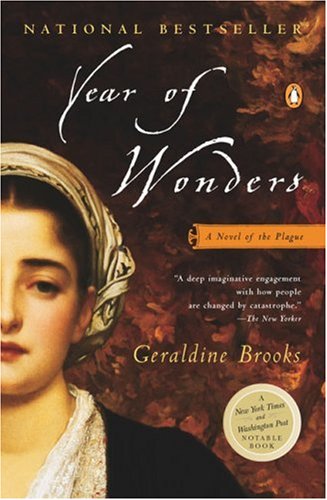
Did you know that today, April 23rd, is World Book Day? Today is a day recognized by all of the United Nations Member States in effort to promote reading, publishing, and copyright (and perhaps pay a worldwide tribute to writers such as William Shakespeare since today is his alleged birth and death date) at a yearly event organized by the United Nations Educational, Scientific and Cultural Organization, or UNESCO.
In honor of this day, I will reveal the book I have chosen to read for the Choice Novel assignment in my English class. The book, Year of Wonders, is a historical fiction novel published in 2001 by author Geraldine Brooks. This book was recommended to me by my godmother, and I am very excited to start reading it! Visit my blog posts to keep up with my progress in reading and analyzing this book.
Subscribe to:
Posts (Atom)